


For some reason, whenever I’m given a topic involving indigenous communities and tradition, I think of patriarchy. Partly because one of my university lectures mapped the kinship lines of Indonesia’s community groups as predominantly patrilineal — only the Minangkabau follow the matrilineal system. And partly because I’d been reading Sherry Ortner’s essay Is Female to Male as Nature Is to Culture?, which frames the relationship between men and women as analogous to that between culture and nature — with culture dominating, transforming, and claiming superiority over nature, just as male authority tends to dominate women in traditional social structures.
I was about to test those frameworks against five days of direct observation.
The Fifth Congress of the Nusantara Indigenous Peoples Alliance

#KMANV — the Fifth Congress of the Aliansi Masyarakat Adat Nusantara (AMAN) — is a five-yearly gathering. The first was held in 1999 at Hotel Indonesia (I was two years old). This fifth edition took place from 15–19 March at Tanjung Gusta, Medan, North Sumatra. I signed up as a volunteer in the communications team: social media, writing, documentation.
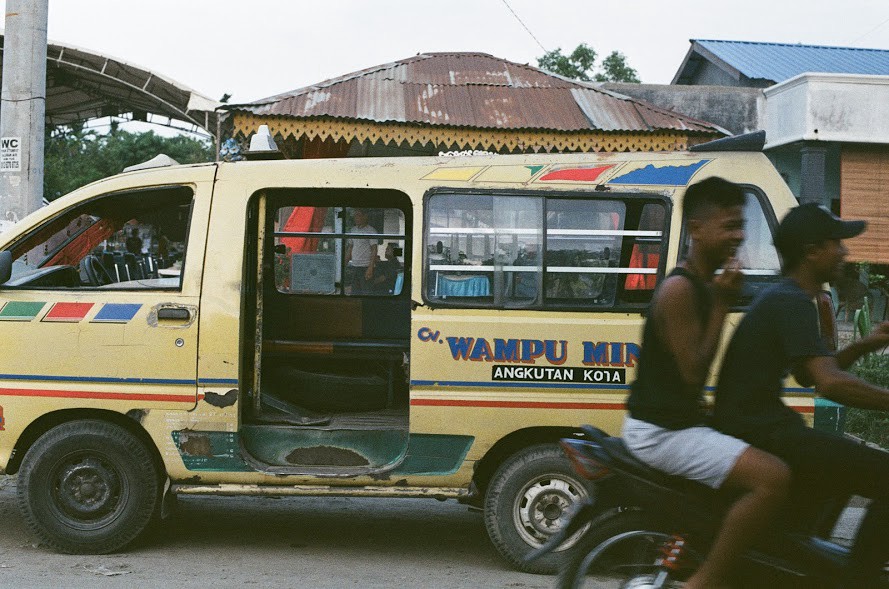
The host community — the Barisan Rakyat Penunggu, or BPRPI — had been fighting to reclaim ancestral land for roughly 70 years, against corporations and the state. The land at Tanjung Gusta, where the congress was held, had only recently been reoccupied by the community after decades of use as a plantation, most recently for palm oil. Dry, dusty in sun, muddy in rain. Very large. Getting between venues meant shared minibuses — no map was provided, which made logistics a navigational challenge for everyone.
AMAN represents 2,332 indigenous community groups across the archipelago. The congress opened with two days of pre-congress discussions across themed tents — religious freedom, disability within indigenous communities, empowerment programmes, short film screenings. Then three days of the formal congress itself: revision of the organisation’s statutes, political positioning, and the election of a new Secretary-General.
The cultural parade that opened the congress proper was striking. Each community group marched in their traditional dress — Minahasa dancers, Dayak communities with their characteristic tattoos, songs from the eastern islands, foot-stamping from Papua. The hall organised by region. When each group was called and stood and cheered, I felt something — the weight of the number of people present, the scale of what they represented, the decades of land struggles distilled into this room.
The Patriarchy Question

And then: the secretary-general election. Rumours circulated about the candidates. Several were women. One volunteer told me that the female candidates themselves were aware of the patriarchal culture and weren’t particularly optimistic about their chances. I found this slightly dispiriting — but I could understand it.
The result: Rukka Sombolinggi, a Torajan woman who had worked within AMAN for years, was elected Secretary-General. I was genuinely surprised. And genuinely impressed.
This is where the anthropology clicked into place. Research on Toraja notes that gender is not a primary axis of social hierarchy there — rank and class matter more than gender in structuring Torajan society. What reads as a significant gender breakthrough from outside may have felt more natural from within a Torajan framework. As Ortner herself acknowledged in her 2013 revisit of the 1974 essay, the original argument was too structuralist — things have changed, and she may have been wrong in some of her assumptions.
AMAN had already institutionalised gender representation at the congress level — each province required to send both a male and a female representative to the governing council. Perempuan AMAN (AMAN Women) has grown as an active wing of the organisation. The trend toward women’s leadership in Indonesian civil society — from the Kendeng Mothers (Ibu Gunarti and others), to women heading major NGOs like WALHI and YLBHI — was visible here too.
What I saw over five days wasn’t the erasure of patriarchal patterns — male volunteers dominated, male voices led most panel discussions, female candidates doubted themselves. But it also wasn’t a static situation. The election of Rukka Sombolinggi as Secretary-General of a 2,332-community indigenous peoples’ alliance was a real thing. Whether it signals a deeper shift or remains an exception is a question for the next five years.

Author: Rugun Sirait, cultural anthropology student with interests in gender, music, and environment.
About The Author

Johan Ferdian JR
Goweser kalcer yang mencoba ngultra • #JurnalPedal #whatthefood #pijak #publica #intuisi #listopia


